
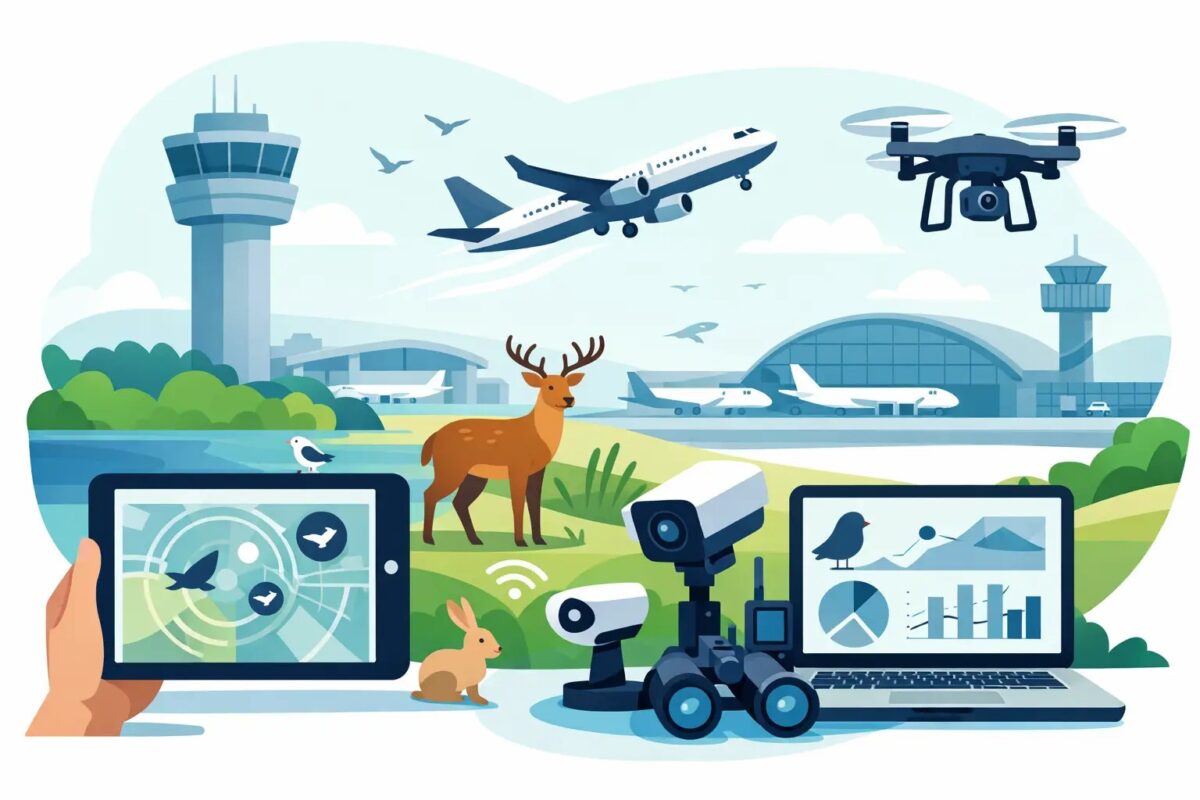

A flock crossing an approach path, gull activity around a stand, or a damaged perimeter fence can become a safety concern quickly. Airport wildlife management software gives operational teams a practical way to capture what was seen, where it happened, what action was taken and whether further controls were needed – while the detail was still clear.
For airport operators, the challenge is rarely a lack of awareness. Wildlife control teams, airside operations, maintenance teams and contractors all see relevant information. The problem is turning that dispersed information into timely action and a defensible record. Paper logs, spreadsheets and delayed handovers make it harder to spot patterns early before they escalate.
Why airport wildlife reporting often falls short
Wildlife risk management is a continuous operational task, not an exercise completed at the end of a shift. Conditions change with weather, season, grass cutting, standing water, waste issues, construction activity and movements beyond the aerodrome boundary. A single report may appear minor; several reports from the same area across a week may point to a control failure that needs attention.
When reporting depends on paper forms or a shared spreadsheet, information can be incomplete, late or held in separate teams. The person who sees a bird strike indicator may not have access to the same record as the colleague reviewing habitat conditions. A corrective action may be agreed verbally but not assigned, tracked or evidenced as complete.
This creates two linked risks. The first is operational: emerging wildlife activity can be missed until it has become more difficult to manage. The second is assurance-related: during an audit, incident review or regulatory enquiry, the airport may struggle to show a clear chain from observation to risk assessment, action and closure.
Good software does not replace an airport’s wildlife hazard management plan, trained personnel or specialist ecological advice. It does make those arrangements easier to operate consistently, particularly across large sites with multiple reporting points and changing shift patterns.
What airport wildlife management software should do
The right system should reflect how work actually happens airside. Staff need to make a useful report quickly, often outdoors, sometimes in poor weather and occasionally without a reliable signal. If the process takes too long or asks for unnecessary fields, reporting quality falls and the system becomes another administrative task.
A practical mobile-first approach allows authorised staff to record sightings, wildlife strikes, carcass finds, habitat concerns, dispersal activity, inspections and related hazards at the point of discovery. Reports can include the species or category observed, location, time, estimated numbers, behaviour, photographs and immediate action. Configurable forms mean an airport can capture the details that matter to its own procedures without forcing staff through generic templates.
Offline capability matters here. Airside coverage is not always consistent, and a report should not be lost because a device temporarily cannot connect. Staff should be able to complete the record, with data synchronising once a connection is available.
Clear locations make trend analysis possible
A description such as “near the runway” is not enough for meaningful analysis. Software should support defined locations, zones and assets, such as runway strips, taxiways, drainage areas, grassland sections, stands, waste compounds and perimeter areas. This creates consistent data rather than a collection of differently worded descriptions.
Over time, managers can see whether activity is concentrated in particular places, at certain times or under particular conditions. That helps teams ask better questions. Is a drainage issue attracting birds? Has a contractor left waste accessible? Is vegetation management producing a temporary increase in food availability? Are reports increasing near a recurring point of fence damage?
The system should make trends visible without asking managers to spend hours reconciling reports. Dashboards and scheduled reporting can provide an operational view of open actions, reported activity, inspection completion and repeat locations. The value is not simply a chart. It is the ability to direct limited time and resources towards the areas of greatest concern.
Turn observations into controlled actions
Recording a sighting is only the first step. Airport wildlife management software should allow a report to create or trigger a follow-up action, assigned to the right person or team with a clear due date. For example, a standing-water concern might go to engineering, accessible waste to facilities management, and a perimeter issue to a security or maintenance contractor.
This prevents wildlife risk from sitting in an isolated operational log. The original observation, supporting photographs, assigned action, updates and evidence of completion should sit within one auditable record. Managers can see what is overdue and intervene before an issue becomes normalised.
There is a trade-off to manage. Not every sighting needs a complex workflow, and creating an action for every routine report can overwhelm teams. Configurable severity levels, escalation rules and review processes allow routine activity to be logged efficiently while higher-risk events receive the attention they require. The aim is proportionate control, not unnecessary administration.
Build an evidence trail that stands up to scrutiny
Airport teams need records for more than day-to-day visibility. They may need to demonstrate that inspections were completed, hazards were assessed, actions were followed through and recurring concerns were reviewed by the appropriate people.
A useful system maintains an audit trail showing who reported an issue, when it was logged, who changed it, which actions were completed and what evidence was attached. This is particularly valuable when staff change shifts, contractors are involved or an incident is reviewed weeks or months later.
It should also support structured inspections. Wildlife patrols, habitat checks, fence inspections, drainage inspections and waste-management checks can be configured as repeatable mobile forms. Mandatory responses, photographs, signatures where required and escalation for failed checks help standardise activity across the site.
Consistency does not mean ignoring professional judgement. Wildlife officers and airside teams need room to record observations that do not fit neatly into a tick-box list. The best forms combine structured fields for reporting and analysis with free-text space for context, including behaviour, weather conditions or operational factors that may matter later.
Bring departments and contractors into the same process
Wildlife risk cannot be managed by one department alone. Airside operations may identify the immediate concern, but engineering, estates, cleaning, grounds maintenance, security and external contractors may each own part of the solution. Fragmented reporting makes those handovers harder than they need to be.
A shared platform creates accountability without giving every user access to information they do not need. Frontline staff can submit a simple report. Managers can review and prioritise it. Assigned teams can receive the action, provide completion evidence and close the loop. Senior leaders can view performance across terminals, airfields or sites without chasing separate files.
This is where configurable permissions are useful. A contractor may need to see and update only their allocated tasks, while the airport retains oversight of the full record. That helps protect operational information while still making contractor performance visible.
It also supports fairer performance conversations. Rather than relying on anecdotal accounts of whether a problem was addressed, teams can review dates, actions, evidence and overdue items together. The discussion becomes about control effectiveness and practical improvement.
Choosing software that people will actually use
A lengthy specification can make every system look capable. The more revealing question is whether a wildlife officer or airside operative can use it confidently during a busy shift. Adoption determines the quality of the data, and data quality determines the quality of the decisions made from it.
Look for configurable reporting forms, simple mobile tools, offline working, location-based records, action tracking, dashboards and a full audit trail. But also consider implementation support. An airport should not have to reshape proven operational processes around inflexible software, or pay for fully bespoke development to make basic forms work.
A-N-T’s configurable reporting and assurance tools are designed for frontline-led, safety-critical operations. They can support wildlife-related observations alongside hazards, inspections, faults, incidents and corrective actions, giving teams a more joined-up view of airside risk.
Before selecting a system, map the real reporting journey. Identify who sees wildlife activity, who decides on immediate controls, who owns habitat and asset-related actions, and what evidence managers need for assurance. Test the process using realistic scenarios, including a report made offline, a photo-led inspection and an overdue contractor action.
The right airport wildlife management software should make it easier for people to report what they see, easier for managers to act on what matters, and easier for the airport to demonstrate that risks were managed with care. When the system fits the work, small observations become useful intelligence rather than paperwork waiting to be filed.